Pride: What Is It And Why Is It Celebrated?
28 May, 2026


Roxanne TakuCo-Founder of TechTalk & Reslink | TEDx Speaker | Helping 300k+ Jo...
Roxanne Taku
Co-Founder of TechTalk & Reslink | TEDx Speaker | Helping 300k+ Job Seekers Get Hired at Tech Companies
Watch or listen on YouTube https://www.youtube.com/watch?v=KFMM3-p8lxU&list=PL2lPbxDqZ_srbm1p3zoszrOTXoxpw6LZC
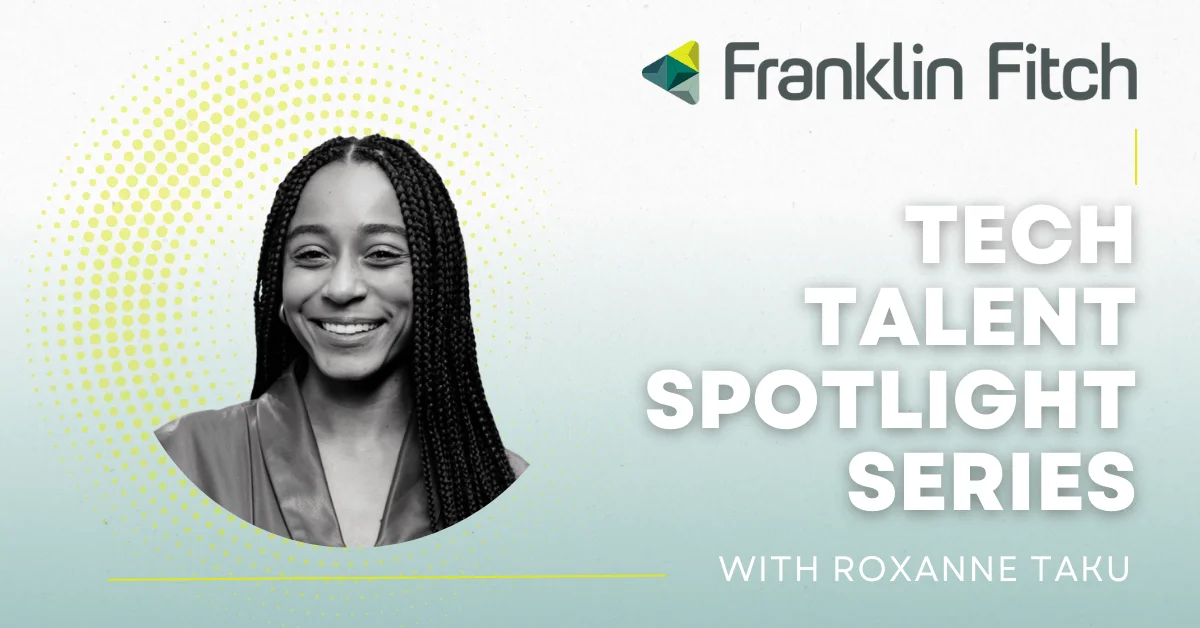
We are thrilled to feature Roxanne Taku, an inspiring leader and innovator, in our latest Tech Talent Spotlight! As the co-founder of TechTalk and Reslink, Roxanne has dedicated her career to empowering job seekers and transforming the way people break into the tech industry. With a mission to make tech careers more accessible and human, she is currently on a mission to help over 300,000 job seekers break into and thrive within the tech industry. Her platforms, TechTalk and Reslink, have revolutionized career growth and job applications, offering personalised support, workshops, and video resumes that help candidates stand out.
Beyond her professional achievements, Roxanne is a TEDx speaker, award-winning leader, and passionate advocate for creating real change in the tech industry.
We’re grateful to feature her in our spotlight series and can’t wait to share her insights, journey, and the impactful work she and her team are driving across the tech ecosystem.
Let’s just dive right into the questions. Could you please tell us a bit more about yourself, share some insights into your background and your journey into becoming a co-founder of TechTalk and Res Link?
Yes, of course. So, first of all, thank you so much for having me. It's really great and I think what you're doing at Franklin Fitch is absolutely amazing. Spotlighting different careers I think is really needed.
So, my name is Roxanne. I'm half French, half from Cameroon, but grew up most of my life in Cape Town, South Africa and moved to the UK about nine years ago to study. Yet ever since leaving university, I've been working in the tech industry, which I absolutely love. Super dynamic industry, very fast growing and I love absolutely everything about this industry. I started in tech sales and then moved into business operations and throughout my journey in tech I've, done a lot of pivots.
I've worked in a lot of different types of companies, all the way from start up, scale up to big tech and today I'm the Co-founder of TechTalk and Reslink.
TechTalk is a community that essentially helps people get jobs in the tech industry. The way it started is that actually when I was working in tech and I was speaking with people, telling them that I worked in tech, the second question that would come up is ‘Great, so, like what coding language do you work with?’ Just for context, I don't code. So, I thought that was interesting, that people always kind of thought that to work in tech, you need to have some sort of coding background or technical background. So, the original idea was actually to teach people about the non-coding side of tech and to show them that there is a path for you or a space for you in the tech industry. But since then, it kind of grew. So we founded it two years ago and since then it's grew to helping both people in coding and non-coding roles in the tech industry.
Reslink, which stands for ‘resume link’ is essentially like a SaaS platform that allows you to put a video pitch on top of your resume or on top of your CV, which you can then send out to recruiters and hiring managers, allowing you to have that human connection with the hiring teams and position yourself strongly for that role. So yeah, the idea behind both is just creating more accessibility to the tech industry.
Sounds like some really great initiatives! And with your career spanning across go to market and sales as well as the tech space what would you say stands out as the most defining moment in your career, one that you're particularly proud of?
That's a good question. To be honest. I think one of the most defining moments in my career was probably when I landed my second job, which was in a big tech company. So, my first ever role was as a sales development representative, basically the most entry level role in a tech sales department, and it was for a fintech startup. After doing that for a year and a half, two years I had set myself the goal of working at a big tech company. I don't really know why. I think I was like, ‘OK, I've got two years of experience now, I really want a big logo on my CV’. But to be honest, I was also very scared of doing that. Because I didn't feel like I had the logos. I didn't feel like I had the experience and I basically put this glass ceiling on top of my head that I don't actually think I realised that I had put there. So, there was a lot of transformation that I had to go through in order to break that glass ceiling.
That's when I really pushed myself outside of my comfort zone for me to land that role.
First, I had to change my mindset. I had to believe that I deserved to be in this big tech company and that I deserved to land these types of interviews. But then there was a lot of learning as well that I had to do in terms of how to build a strong CV, how to build a strong LinkedIn, most importantly networking, so that I could get referrals into these companies and so that I could understand how they worked.
I think that was a very defining moment for me because in the end, it took a couple of months, I'd say maybe anywhere between eight months to a year. But I learned so much in terms of my worth and the fact that, actually, I can land interviews and offers at these big tech companies. I think me going from a moment of ‘oh, this would be a good thing to try’ and ‘whatever happens, happens’ to actually landing those offers showed me that I can do whatever it takes as long as I have the mindset and as long as I just execute on what needs to happen.
So, that was definitely a defining moment in my career because I think even now as I founded my business, I'm able to remind myself of how I went through that time where I thought I landed something that I originally thought I didn't really deserve or that was unattainable. That's definitely been something that's helped me, even during hard times. I'm like, ‘I've done it before so I can do it again!’.
That's really interesting because I think that's a barrier to a lot of careers. That mindset-shift to ‘I can actually do it’ and having that self-confidence. What would you say helped you get to that point?
Honestly, I think like essentially every small win helped me get to that point At the beginning it felt very big and a bit far out of reach, but then when you start breaking it down step by step and achieving one thing at a time and realising that you're closely getting there, just made it easier. So, I think even now if I think of a very big goal that I want to achieve in one year, two years, five years’ time, I try not to focus so much on the big goal, but I think, ‘OK now how do I reverse engineer this is to something that I can take action on now’ because otherwise it's like very big and you almost feel paralysed because you think, ‘oh, this is too big, I don't even know how to get started’. But just by taking, even if it's just an hour or two to genuinely think about how you're going to get there, then you focus more on that initial small goal first, it makes it a lot more attainable.
For example, for me, first the big thing that I had to think about was ‘OK what is the role that I want to go for?’, to then ‘how do I build my CV that's well positioned for that?’, and then that was the first goal. Then I learned, to build the CV and what it is that I need to be sharing.
I also think your network, as well, reaching out to people, whether that's building your network or who you have around you, helps a lot because if you're in your head or something feels very overwhelming, as long as you have people that support you and that can encourage you along the way, even during moments when you're down, you keep going. So, I would think taking the big goal, reverse engineering it into smaller goals, so that you can work towards it combined with being surrounded by people that believe in you and that support you and remind you why you set that goal in the first place and why you should keep going for it.
It's always good to have that support system. Taking from your own experience and maybe your experience with TechTalk, for example, what would you say are some of the challenges that job seekers from diverse backgrounds face in today's tech job market?
Yeah, I think a big one is lack of confidence and I mean it makes sense why, right? I think one of the big reasons is because they don't see as many people that look like them in the type of spaces that they want to be in, which is why I really like what you guys are doing with the tech spotlight, because I think it kind of goes a level deeper and it allows people to share their stories and it makes you realise that there is a space for you.
I think similar to my story where I had put this glass ceiling on top of my head without even necessarily realising it because at the beginning I thought I could work at a big tech company, but probably only like 10 years down the line once I've achieved something bigger. Then it was just somebody that told me ‘why do you wait? Why don't you just give it a try now?’ So, I think definitely lack of confidence, putting our own glass ceilings on top of their head or our heads and feeling like this isn't a place for us. Yet definitely one thing I think also, going back to the support network, not necessarily feeling like you have somebody that you can speak with about it or feeling that the people that do speak with you about it maybe don't have similar stories so when they're like, ‘oh, just reach out to a friend that works at that company’ it’s like, ‘well, I don't have friends that work at that company. So how am I supposed to get a referral if I don't know anybody there?’ So I think definitely lack of confidence is one thing that I see just because of them not being able to see other people like them in that space, but then also maybe not having the support network that they need, I think is the other thing. But I'll say lack of confidence is probably the bigger one because your support network you can always build that or you can try put yourself around people that can support.
And throughout your career in the tech space, in sales and with TechTalk and Reslink, have you seen any kind of DE&I improvements? Any initiatives that have worked really well that you think were successful or anything like that?
Yeah. I think companies are a lot more conscious about this now and they're taking more proactive action, which is good. Even something as small as having conversations about what it's like being a minority or a person of colour within a company. I think opening up that conversation is really important. So, for example, one of the ways that I felt more confident going for this was because I attended a lot of panels or listened to a lot of content where I would go out and find content where somebody that looked like me was talking about their career path. I see more and more companies doing events for minority groups, for women, just to open up that conversation.
I think there's definitely been some changes, especially since, the events of George Floyd and I think that that's turning a negative into a positive, which I think is good.
But there's definitely still a long way to go and we need to make sure that we still continue having these conversations so that whether it's somebody who is just starting in their career or somebody who's already in their career but needs like a little bit of a lift up, they still have this type of content resources that they can go to.
I agree. There's still a very long way to go before we get to the right place. Outside of maybe limiting beliefs, have you come across any other barriers to success yourself?
Yeah. Let me think about this one. Because I do think a lot of the times, the biggest barriers are,
I mean, there's obviously the systematic barriers, I think we can't pretend like these don't exist. But I think the way to think about it is that they're also not going to change overnight. So, it's either you choose to recognise these systems still have to have conversations about the system, because that's how they improve for yourself 10 years down the line or even the generations after you. But if you're looking for a certain action or a certain outcome to happen tomorrow, then it needs to come more from within you and realising that you have control of your own destiny. No matter how many systematic barriers or systemic barriers there are, you can break every single one of them.
There’s definitely a truth in terms of it, it's mentally draining, it's physically draining, right? I've always worked at companies where I'm the only woman of colour or one of the few women of colour. And I think at the beginning I used to actually spend a lot of energy and time thinking about that and making myself small because of that. But again, because of going through these panels and seeing other successful people of colour, women of colour, being where they are and them talking about their journey and how their mindset shifts. Thinking like ‘you know what, actually, you being the one of few is a positive right?’ Because it means that you stand out. So many people at companies, they want to be seen, they want to be visible, they want to get the attention that they think that they deserve. They want the spotlight and you naturally have a little bit of that spotlight because you're the one of a few.
I think almost seeing that as an opportunity rather than something to shy away from, because realistically because you're the one of a few, you're going to be seen anyways, so why not use that as a way to propel you and really sit in that and lean forward in it rather than trying to hide away from it.
I mean, I definitely think that there were times where I was underestimated probably, as a woman, because I didn't look like everyone else, because I didn't speak like everyone else. But I actually found that the times where more positive things were drawn to me was when I chose to just own it. I owned it. There wasn't anything that I was trying to shy away from, and it also just made me more confident as a professional and I think people really actually valued that. They valued that I was comfortable speaking up while still being myself and not trying to assimilate to how other people are speaking and if anything, actually managed to use that as a superpower rather than running away from it.
There's definitely the systemic barriers. As we talked about, there's still a long, long way to go to remove those, but I think you know, as long as you choose to think about it in an opportunistic way, which sounds weird to say, and say, ‘OK, me being one of you, actually, I can turn this into a positive rather than dwelling on the negatives of it’, you can make more things happen for you that way.
How do you think can we encourage more women, especially women from minority backgrounds, to get into the tech industry?
I think getting us together is nice. So basically, getting us in a room, or getting us at events, or getting us in communities where you can speak with other women that have the same experiences. It's nice because you realise that you're not the only one in in the space. It's easy to feel isolated. A lot of the times, especially when you're the only one in your team in your company or things like that, because you're spending so much time at work, it's easy to believe that your team, your company, is how everything is and you're like, ‘oh, I'm the only one in this entire industry’. But by putting yourself out there and joining community groups where you get to speak with other people that have the same experiences, I think that's when you, from hearing their experiences and how they've dealt with things, it helps you figure out, how you can use their learnings for yourself as well.
I think definitely starting early, having more initiatives even at schools, at universities, in apprenticeship programmes where they they're more exposed to people from different groups. A lot of the times we only start figuring out, once we're in the world of work, what the reality really is. And I think if there was a little bit more initiative earlier on in the process in educational system, things like that, then we would be able to encourage more minority groups to see the opportunities that exist in tech and how you need to be navigating your career in tech.
Mentorship is another one and this is whether it's already an existing mentorship programme or one that you go out and seek, I think it's great to be seeking mentorship from people that look like you or people that at least understand the experience. So, it can also just be an ally, right? I think that's really important to recognise allies and recognise what an ally can do for you as well. I think that's important. Just not keeping it all in, being able to let it out, again, with a support network, whether it's one that you already have or whether it's one that you go and build for yourself. You just realise that people you surround yourself with will make or break your career. Whether that's at work, whether that's outside of work and so, really being conscious about who it is that you surround yourself with, so that when there are moments of doubt, when there are moments that you don't know how to handle a certain situation, such as how to handle maybe a microaggression or something or somebody in your team, something like that, you know how to handle it in a way that's going to give you the outcome that you want. I think that there's a lot, but I think in terms of summary: definitely start earlier on in terms of the institutions so that people are aware of the different types of careers and tech and they can see that there's a place for them there. Building your surroundings or a network so that you feel comfortable and then wherever you can go for like mentorship, whether that's with an ally or somebody else from your group.
I really like the start early point, I think that is really valuable, but do you think the responsibility there lies with schools or maybe even with organisations to get involved in that?
Thank you. I think both to be honest. It would be great to have partnerships, right, between these schools and organisations and if these schools can see that there are organisations that are actually spending their time showing that they're open and that it's a comfortable space for all types of people from different groups and that there is ability to thrive and that they're consciously, very aware of this. I think that it makes it even more comfortable, right? Because I mean, every company is going to have a different level of involvement and effort in pushing the DE&I agenda. But I think if you already pinpoint the types of companies, the types of people that would be great. I do think more companies, as well, just need to, whether it's conversation or actively structured training related to how to manage people from minority groups is really important. I remember that I was having a conversation with a consultant, he was working at a big consulting firm and they had done a study on essentially promotion tracks. And one of the studies had found that people from non-minority groups were being promoted faster than people from minority groups, even though the level of work, results and achievements were exactly the same. So, the main difference that they found was that people from minority groups, just because of our culture, whether that's Asian, African things like that, we are taught not to talk about our achievements. So, it's not really something that we talk about, put your head down, work and then if you work hard enough, your achievements or your work will be recognised. Whereas I guess more majority cultures, they're more taught to ‘boast’ about themselves and talk about the things that they do well. Whereas because in minority groups, it's just the expectation: It's not you. You're not meant to boast about yourself and so, what they found was that when the promotion review cycles were happening, managers were always talking about the groups of people that were talking about their achievements to them. Which is why people from majority groups were being promoted faster or more often than people from minority groups, even though the actual output and outcome was the same. This is something that, it makes sense, right? For me, as somebody from minority group, I'm like, ’yeah, that's so true’. I've always been told, ‘don't boast about your achievements, just focus on your work and then if you work hard enough, it's going to be seen’. But it's only by reading through this report or, again, going to panels and hearing people say ‘you need to talk about your achievements. That's how you progress faster!’ then you realise that, OK, this is how I need to adapt. This is how the system works and this is how I need to adapt so that I make the system work in my favour, and it also meant that that consulting firm was then able to share this insight with their managers so that it then meant this is something that managers should be aware of. ‘How about you ask your direct reports more about ‘what is something that they've achieved’ and get that information out of them or encourage them more to speak about it rather than just letting the people that more naturally speak about it and the people that don't actually speak about it, keep it quiet. So, I think there's that point as well. Making sure that organisations do actually educate themselves on this and then think about how we can then educate our managers so that they are aware of this and potentially change some of their habits or change their ways of working to make it more equitable across everyone.
Yeah, I think that's a really good point, knowing that there is an issue is often the first step, right? Because people, whether it's unconscious or whatever we want to call it, but people just often don't see the issues until someone actually points out. You told us a bit about TechTalk and Reslink, could you please give us more of an insight into the organisations and their mission and activities?
Yeah, 100%. So, TechTalk, we're a community where we help people get jobs in the tech industry. Whether that's coding or non-coding, we're both female founders, Black founder and then my other co-founder, she's from Brazil. So naturally, we actually attract a lot of people from underrepresented groups that we help get jobs in the tech industry.
We founded this about two years ago, and since the beginning of 2024, we've helped over 300 people get jobs in tech, which is something that I'm really, really proud of. One of the big focuses that we have moving forward is just making that number of people that we've helped get jobs in the tech industry bigger and bigger. We help in a couple of ways. So far, it's been very educational content. Teaching people - this is how the tech industry works, these are the types of roles that exist. If you've got these types of skills or if you're looking into this kind of pathway, this is what you should consider. And then these are the steps that you need to get there in terms of CV, LinkedIn, all these kinds of things. Then a couple of months ago, maybe five months ago, we built this community platform because it was very much like broadcasting us teaching them. But then we wanted to build this community where we actually get the people learning from each other, helping each other out, working with each other, giving each other referrals, and just feeling that they're not alone as part of that journey. Next year and beyond, what we're looking to do more is actually partner with more companies, recruitment agencies, just essentially bridging the gap between that talent and companies that are actively looking to hire.
Reslink actually came out of building TechTalk because we noticed that whenever we were, I mean, the job market’s changed a lot and the way that companies hire has changed a lot as well. One of the biggest pains or challenges that we kept hearing from members from our community was that they feel like they're just sending out applications into the void. So, they're sending out CVs, they're not, they’re either getting ghosted or they're getting automated rejections and they just feel like they’re not being seen and that essentially this job market is a massive fight for visibility and that they just feel like they're not even given the chance to start with because they're being measured or evaluated based on bullet points on a CV rather than their true potential. Especially now with AI it's very easy to write a CV with ChatGPT and a bunch of AI tools, but there's also a lot of AI tools that would just like mass apply on your behalf and so it makes sense that that's why companies, they're getting too many CVS. They're feeling very overwhelmed, and so it makes sense that there's so many rejections happening because if you have one role that you fill yes, before there was 300 applications, but now there's 1000. So naturally, there's going to be more rejections that happen.
But off of this pain of not feeling visible, a lot of the feedback that we were getting is like if only they could have that first conversation with me, they would realise my potential and they would realise what it is that I can bring to the table. So that's why Reslink was created so that essentially users or job seekers can add 60 to 90 second video pitch on top of their CV, which they then send to the specific hiring team. So let's say that they're applying for a role at Google, they will specifically explain why they're a good fit for that role at Google, and there's two ways that they can share that. It's either through a link that they can send directly to a recruiter and hiring manager, whether that's on LinkedIn, e-mail, etc. or it's that they can download it as a PDF and they can basically add a button on their CV, which means that when they send that through the normal applicant route and as long as somebody sees through that they'll be able to click on it and get to see the person behind the CV. So that's why it's creating that human connection again, because a lot of the feedback that they're getting is that this feels a bit dehumanised.
We just feel like bots are choosing whether we get seen by the recruiter or not. So, Reslink is aiming to help that and bring the human connection again into hiring.
That's one step that recruiters often help with, right? That's one of our selling points, really. You're not just ending in a pile of applications. You're actually being introduced to the person at the other end who’s hiring because your recruiter can obviously advocate for you.
How do you think diversity and inclusion can drive innovation and business growth?
I think it's key. I think there's a lot of statistics, that show that companies with diverse workforces actually get better results in terms of revenue or even in terms of customer satisfaction. I think like a big way to think about it is like the more diverse your workforce is actually the more people you can reach. Let's say, we're building a consumer product. If you have people from a diverse background actually building that consumer product, then they're going to make that consumer product fit for people from their background as well. I think one example of this is the iPhone. Whereas before the way that it was built, if you took pictures, it didn't always look that great for people with dark complexion. So, they maybe didn't prefer buying the iPhone, but they prefer buying another phone, which they felt just looked better on them when they were taking pictures. But then by having diverse people in the teams that built the cameras for these iPhones, they were able to build an iPhone that actually is suitable for all types of skin complexions versus only the fairer complexions. I think that's just one example, but it really goes across the board. So, if you have a diverse team and you're looking to tap into like a certain type of a market where there's a specific group that tends to use that market. Or you are having that diversity of thoughts or people that think different ways around the table means that you can actually really widen the type of businesses or even consumers you're able to reach and tap into.
There's also that thing of resonating more with the brand. It's simple, even though there's so long way to go, but one of the main reasons I decided to join the tech industry versus a professional services industry for example was that I was able to see more people like me in the tech industry than I could in professional services. If you think about professional services, I think usually there's a very specific type of persona that you picture in terms of suits and the way that they look. Even though it's still a long way to go in tech, I could see more women in leadership in tech and even if it maybe wasn't women of colour, I could see more women and I could see more younger people as well. So, already just those two factors where I was like, OK, there's more women and there's more younger people in senior positions that already makes me more drawn to that industry than professional services industry, where it's more male dominated and older as well. So, it felt more of a further away reach.
So, definitely having diversity in your team is key and it just allows you to actually reach more people and reach more people with positive satisfaction.
Again, it's that awareness piece, right? If you don't bring a diverse group of people to the table, then you're not going to know about all the potential issues with your product in the end, right? OK. Well, we have two more questions. If you could have a one-to-one mentoring session with any tech or non-tech leader past or present, who would it be and what would you ask them?
Yeah, there's a lot of great people out there that I would want to have conversations with.
I mean, I'm sure you get this answer a lot, but I'm going to say Michelle Obama, just because I think that she's pretty impressive, in terms of the way she communicates. I think she has incredibly high emotional intelligence and she can talk about anything, whether it's something very complex, or whether it's something different, but still she's able to really capture a whole room's attention. I think she's able to communicate very well. What it's like being a woman in a place where, even a black woman, in a place that is not meant for her. Or where there's not a lot of people like her and not just the other people of colour will relate and understand what she's saying, but I think she's able to really speak to the masses about those types of topics. She's just very relatable, which I think is another thing actually, relatability is really important because when you feel relatable to someone, that's when you feel like you can do the same things that they're doing, which is why the part about visibility is so important. She's still managed to, you know, be herself. She's not changed who she is, even during or after having been in the White House or doing time in the White House. Again, seeing that, seeing a woman that’s still herself, even when she's in the White House and in this position of a lot of power and a lot of eyes on her. I think it encourages other people to also be themselves, as they're going up the ladder or, you know, figuring things out.
Michelle Obama's definitely. I’d love, love, love to meet her. Feel like I'd ask her so many questions. She'd probably be tired of me by the end of it.
What would be one of the main questions you would ask her?
I think I would ask her just, I mean it's a very running theme for me, but the point of mindset, just how do, in a moment where you have doubt or in a moment where you can clearly see somebody's doubting you and you know you're being dismissed or you know, especially in a in a moment where you have so much public light, people aren't just dismissing you, but they're actively telling you that you shouldn't be here, that you can't do it, or you're not fit, what are your habits or what are your mechanisms that just allow you to keep pushing through in that moment? What do you tell yourself that makes you snap out of it and reminds you that you are worth being here and that you know you're going to keep going and attaining everything that you want to attain. So, I definitely think, what are things that work for her so I can hopefully also take it on and make it work for me. I would definitely ask her that.
Final question, what would be your best piece of advice for a young woman who would like to start a career in IT or tech spaces? What would you, what would you tell them?
I think the first thing is don't disqualify yourself early. Don't put a glass ceiling on top of yourself. If you do have a glass ceiling, that's fine. Be aware of it and just push through it or try and break that glass ceiling. However, you know how long it takes and in terms of like very practical Advice on how to do that. I would think it would be put yourself out there, go and have conversations with people, reach out to people that you can have these conversations with, whether it's reaching out to people at companies that you're really excited about or want to learn about. When I was networking, to be honest, I was just reaching out to a lot of other people from minority groups because I noticed that they would be more likely to respond to me and want to have a conversation when they can see that somebody's trying to pave their own path. So, you'd be very surprised, at the beginning, my mindset was ‘nobody's going to want to speak with me like I'm a complete stranger, very new in my career. What is it that they can gain from this?’ But to my surprise, people are actually very, very forthcoming. And some of the things they would tell me on calls was ‘oh, well, actually, when I was looking to pave my own path, the reason I was able to get here is because people took their time and spoke with me and I just want to pay it forward now.’ So, you'd be surprised by the amount of people that genuinely want to help. When they see somebody that's just proactive and wants to get there, they will spend their time helping you get there. So, I think don't be afraid to put yourself out there, whether it's joining community groups or whether it's just going out and meeting or trying to speak with individual people that you can just learn something from. I think is massive. And then again by having those conversations, you're sort of building your confidence because one, when you start doing the research and realising that there are people that look like you out there and you start speaking with them it almost becomes like a snowball effect. They'll then introduce you to other people. You start having conversations about some of the initiatives at this company. You know why it is that they feel comfortable in this company, why they think it's a company where they're able to thrive.
And yeah, you feel a lot less isolated. So, I would say, don't disqualify yourself too early and if you do have these limiting beliefs, that's completely fine. It's not abnormal. Just be aware of them and start figuring out what actions you need to take to remove these limiting beliefs.
The second thing is just put yourself out there because the more you expose yourself to things, the more you realise you can actually do more than what you originally anticipated.
A huge thank you, again, to Roxanne Taku for taking the time to share her story and insights with us. Her journey is a powerful reminder of what can happen when you stop counting yourself out, take practical steps toward big ambitions, and surround yourself with people who genuinely want to see you win.
A few themes really stood out in our conversation. First, confidence doesn’t appear overnight—it’s built through small wins, consistent action, and breaking big goals into steps you can start on today. Second, access to opportunity improves when hiring feels more human. That’s exactly what TechTalk and Reslink are working toward, using education, community, and tools like video resumes to help candidates be truly seen, not just scanned. And finally, representation and strong support networks matter more than ever, because when people can see what’s possible and feel supported along the way, it changes what they believe they can achieve.
Our Tech Talent Spotlight Series aims to shine a light on individuals like Roxanne, who are driving change and pushing the boundaries of what's possible in the tech industry. It’s an opportunity to showcase expertise to a wider audience and inspire the next generation of technology leaders.
If you or someone you know would like to be featured in our Tech Talent Spotlights please reach out on hello@franklinfitch.com .